
INDUSTRIAL ULTRASONIC TESTING
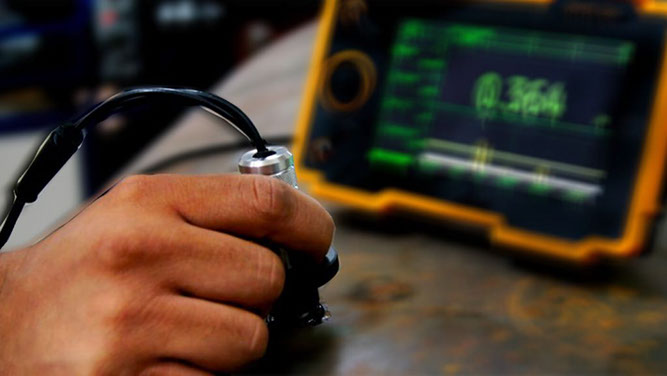
-The industrial ultrasonic testing method uses ultra-high frequency sound for the inspection of parts and components. The ultrasound is introduced into the part and, if the sound encounters a material with a different acoustic impedance (density and acoustic velocity), the sound is reflected back to the emitting instrument and can be seen visually on the screen.
-Knowing the speed of sound through the part (acoustic velocity) and the time required for it to return to the emitting body, the distance to the reflector (the indication with different acoustic impedance) can be calculated.
-The frequencies typically used range between 2.25 MHz and 7.5 MHz.
-Low frequencies have greater penetrating power but less sensitivity (the ability to see small defects), whereas higher frequencies do not penetrate as deeply but can detect smaller flaws.
-The ultrasonic method helps you evaluate metallic and non-metallic materials to look for defects or cracks. It also helps with thickness measurement and the detection of corroded areas. In the railway sector, it supports the inspection of rails and train wheels, as well as brake discs and gears. In the oil and gas sector, it helps analyze metallic structures, storage tanks and pipelines. In wind energy generation, it helps inspect blades and generator components.
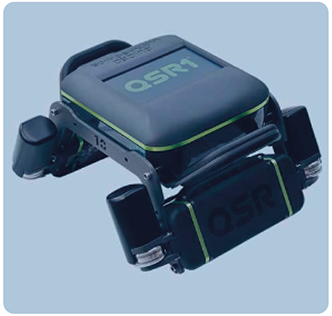
WALL AND TANK INSPECTION
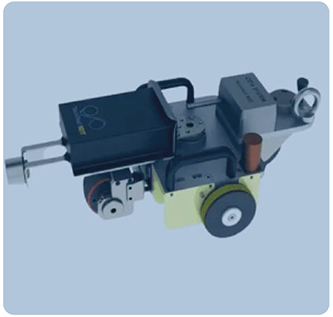
LONG-RANGE ULTRASONICS
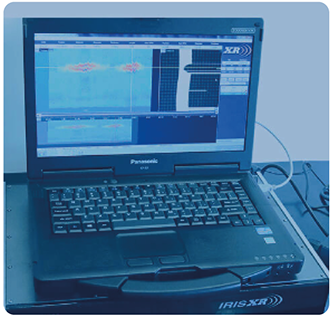
HEAT EXCHANGER INSPECTION
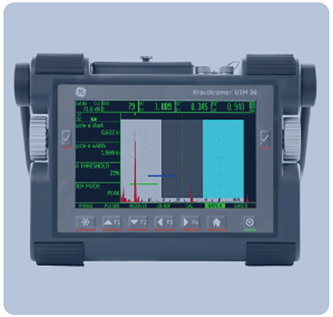
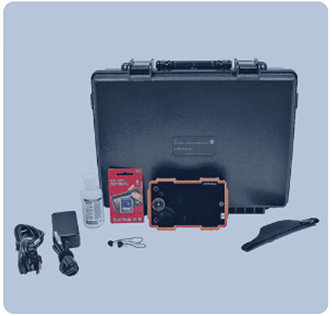
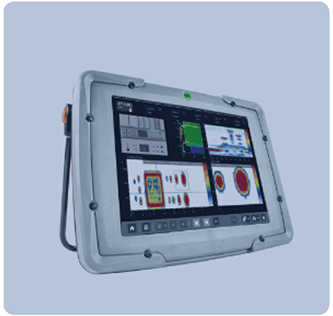
USM36 (FLAW DETECTION AND PHASE ARRAY)
THICKNESS MEASUREMENT
CORROSION MEASUREMENT AND MONITORING
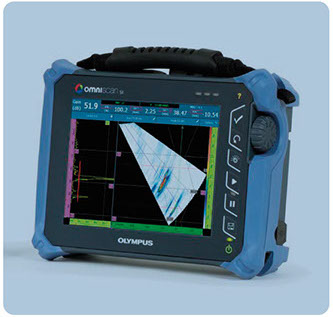
OLYMPUS MX2 GAUGE
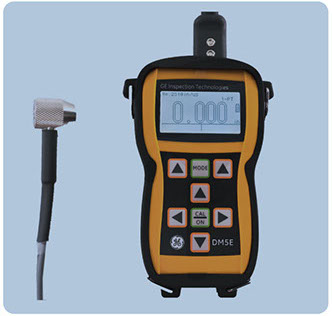
DM5 GAUGE
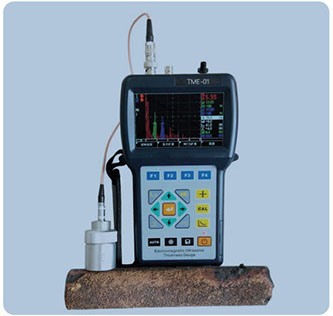
TME-01 GAUGE
UNIT 3 6/7
ST. MARY AT HILL
EC3R 8EE - LONDON
UNITED KINGDOM
C/ PI I MARAGALL 8,
OFICINAS
43205 - REUS
SPAIN
MEYDAN GRANDSTAND, 6TH FLOOR, MEYDAN ROAD,
NAD AL SHEBA -DUBAI
U.A.E.

